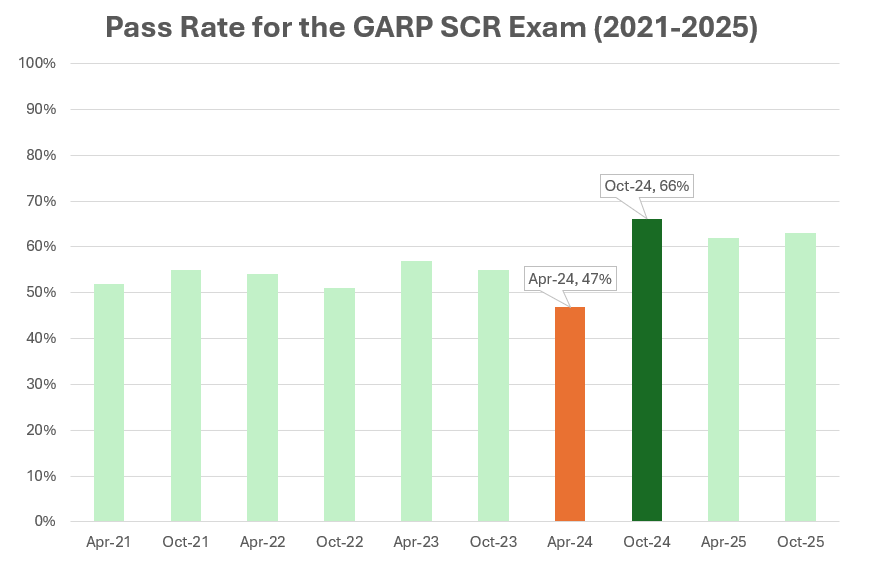
Pass rates have historically ranged between 50–57%, making it a genuinely competitive exam that roughly half of all candidates fail on their first attempt
Mar 12
/
Green Risk Education
Historical Pass Rate for the GARP SCR Exam
A few things worth noting:
Pass rates have historically ranged between 50–57%, making it a genuinely competitive exam that roughly half of all candidates fail on their first attempt. In 2024, this range widened significantly — dropping to a record low of 47% in April before rebounding to a record high of 66% in October, a near 20-percentage-point swing in a single year that reflects how meaningfully exam difficulty can shift between sessions.
GARP recommends 100–150 hours of study to prepare adequately, and discourages last-minute preparation given the breadth of the curriculum.
The exam has undergone two notable curriculum overhauls since its launch in 2020.
The first major update came with October 2024, when GARP expanded the format from 80 questions and one case study over three hours, to 90 questions and two case studies over four hours — and introduced new chapters on Climate and Nature Risk Assessment, Transition Planning, and Carbon Reporting.
The second update took effect for the 2026 curriculum (December 2025), which revised chapter weightings and added explicit calculation expectations, particularly around carbon metrics.
GARP reviews the curriculum annually, so candidates should always verify they are studying the current year's materials via the GARP Learning platform.
Empty space, drag to resize
How Green Risk Education fits in
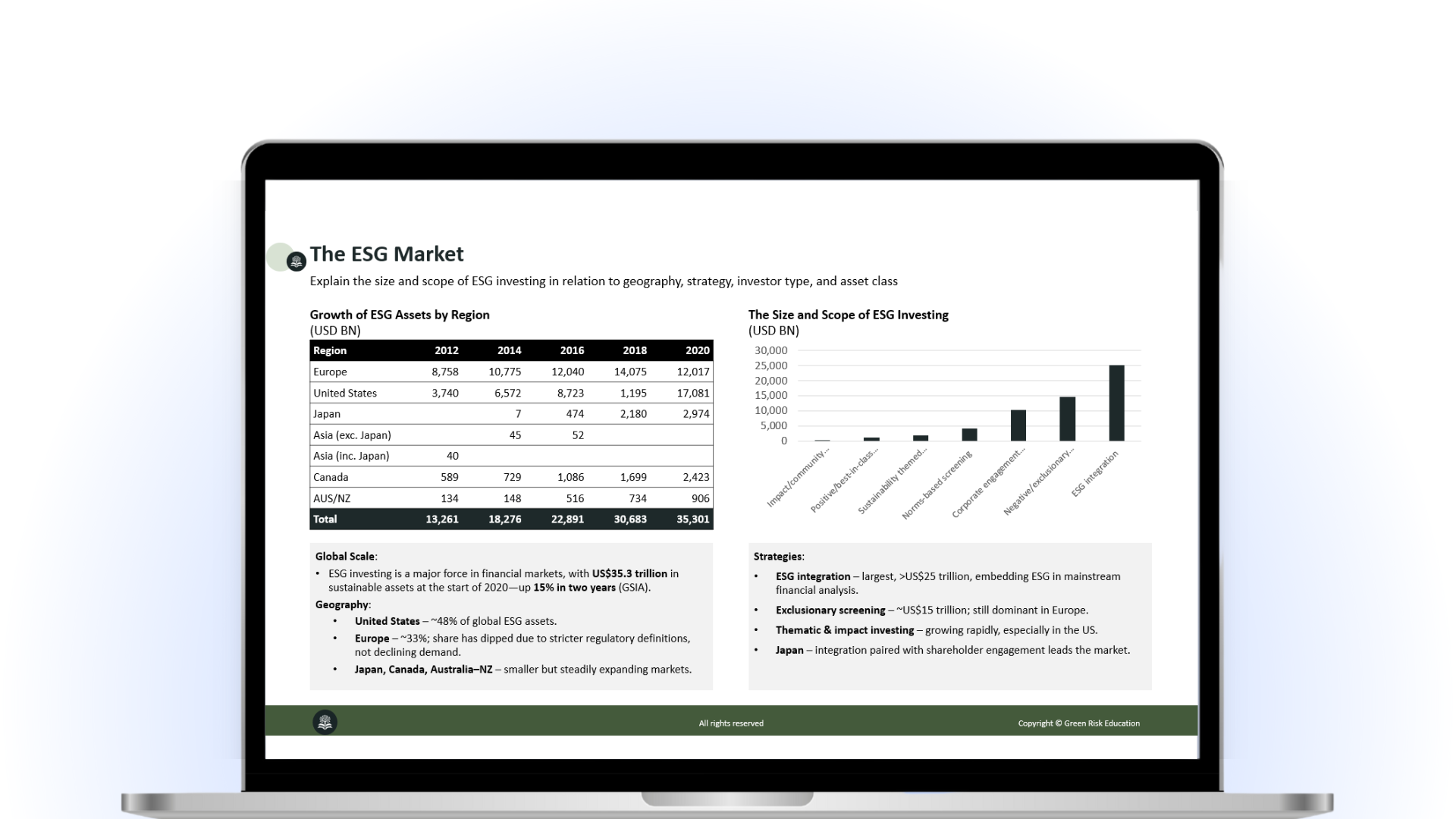
At Green Risk Education, we design courses that map directly to these exams:
CFA ESG / Sustainable Investing Course:
10+ hours of video lectures aligned to every learning objective.
Full summary notes split by learning objectives (100+ pages)
450+ chapter‑style questions and 4–5 full length mock exams.
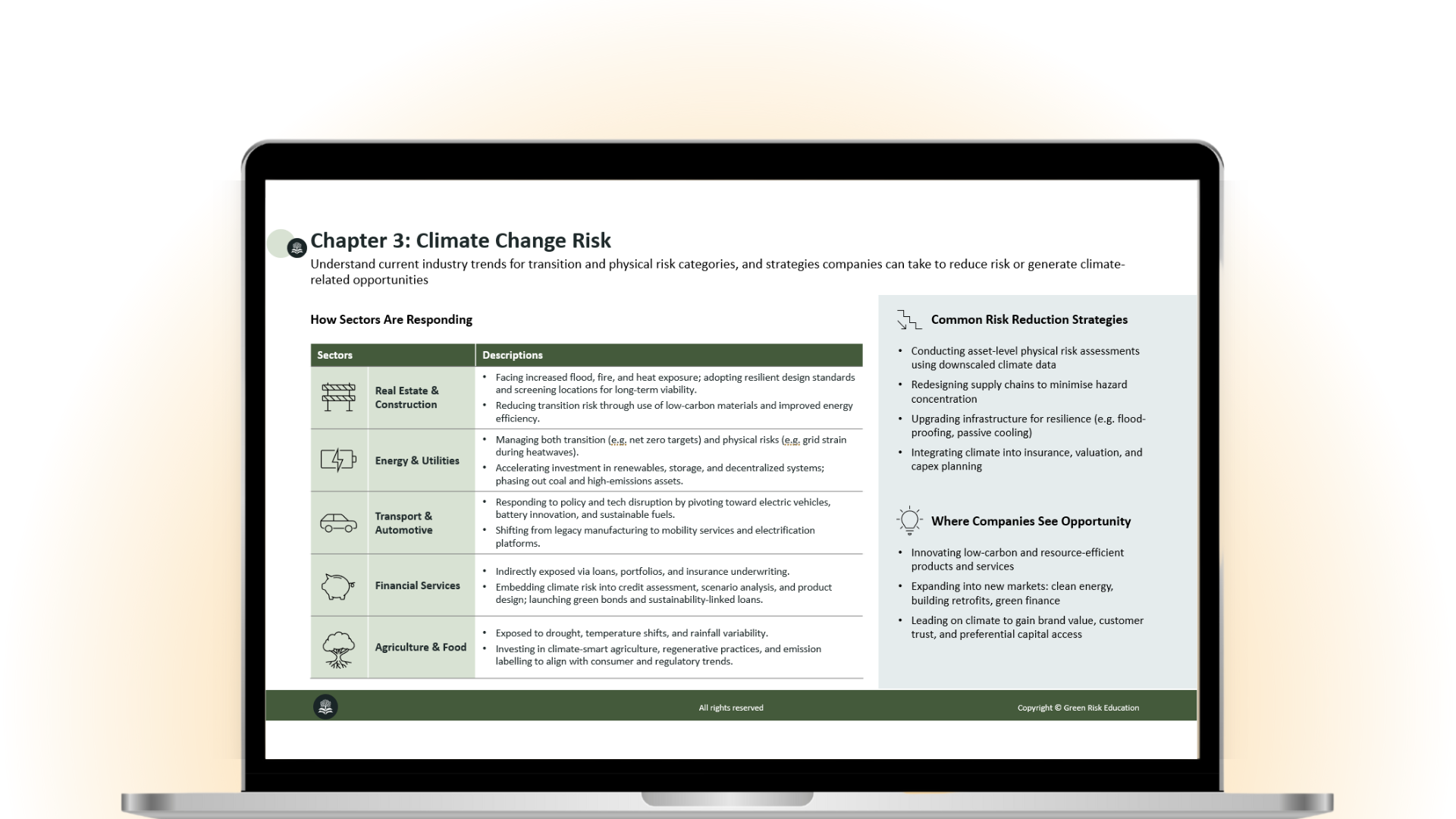
GARP SCR Course:
10+ hours of video lectures aligned to every learning objective.
Full summary notes split by learning objectives (100+ pages)
450+ chapter‑style questions and 4–5 full length mock exams.
40% OFF!
FLASH SALE FOR OCTOBER 2026
Get full course access for just $89 (was $149)
Limited to the first 30 students or until the timer ends - whichever comes first.
Code: EARLY2026
Write your awesome label here.
Created with
Login or sign up to start learningLogin to start learning